
|
Monday, February 4, 2008
A Neat Strength Technique Called Static Reps
Here is a technique called static reps that will increase your strength in a certain lift. Make sure you add about 40% heavier weights to these lifts. That way your ligaments will gain strength and allow you to put up larger weights once you go back to traditional reps.
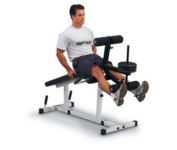 Static reps are done by holding a weight in a fixed position, usually fully contracted, for an extended period of time. They are typically done for 1 or 2 reps only and the weight should be held for 15-25 seconds although the actual optimal time is still up for debate.

Thursday, January 31, 2008
Great Tips for Increasing Strength With Partial Reps
Here is a clip I found over at bodybuilding.com. You probably have heard of partials, but in case you haven't it is doing a rep with a much heavier weight than normal not performed through the full range of motion. The main advantage is that your strengthen your connective tissue to be able to handle much heavier loads. This is a limiting factor in gaining strength at times.
If you haven't done these for a while give them a try!
If you haven't done these for a while give them a try!
Partial Pointers
|

 The power rack is your best friend. By setting the
 Before you do a heavy partial rep, be sure to prepare
 Set aside your preconceptions of how much weight
Subscribe to:
Posts (Atom)
